

Responding to post-Dobbs predictions
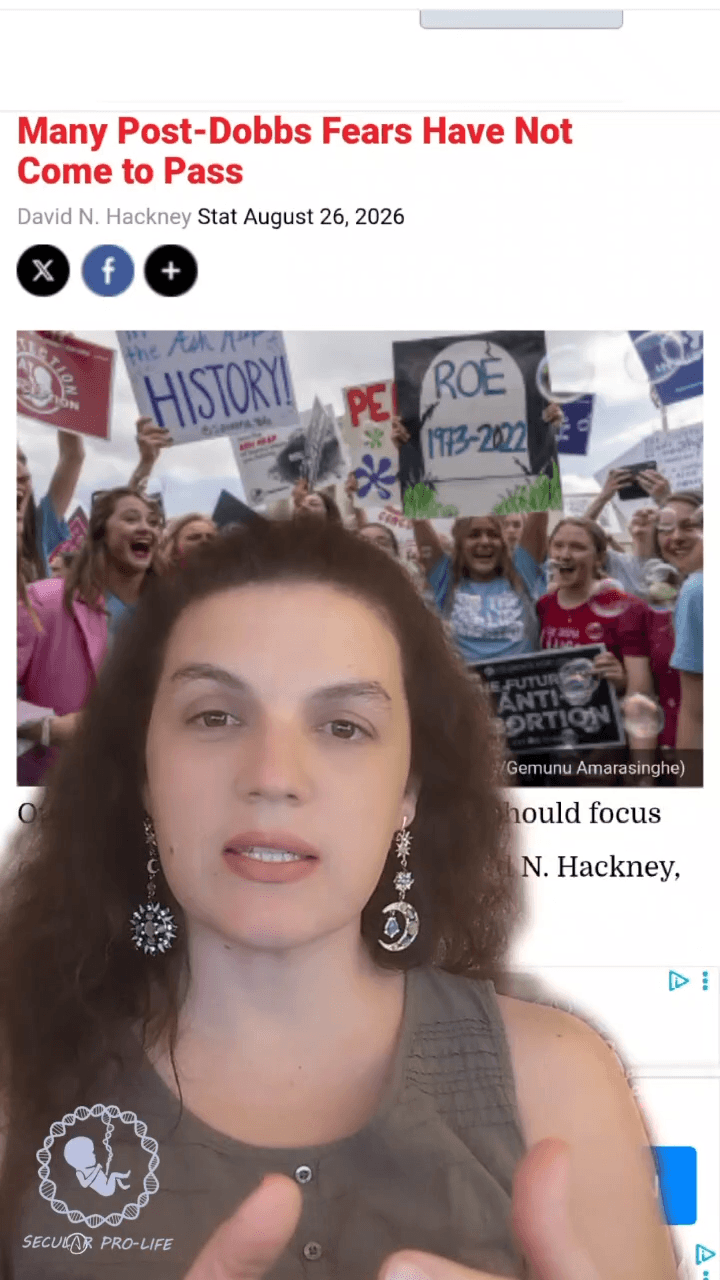
Surprisingly blunt piece by David Hackney, a physician who supports abortion rights called “Many Post-Dobbs Fears Have Not Come to Pass.” Hackney talks about four predictions that happened around the time of Dobbs:
- Infant mortality rates would increase,
- Maternal mortality rates would increase,
- Abortion rates would decrease,
- OB-GYNs would leave states with abortion restrictions.
Taken one at a time, prediction one was that infant mortality rates would increase, and he cites a study that found that infant mortality rates went up between five and six percent compared to if there hadn’t been abortion restrictions. I actually co-authored a response to this that we got published in a bioethics journal, but what we point out is that what they mean is that when there are prenatal diagnoses of some kind of anomaly, even of some kind of anomaly that’s not life-threatening, now it’s illegal to get an abortion in those cases, and so a bunch of fetuses with various disabilities or issues are born and even though most of them live, some of them die and that increases infant mortality rates. Abortion decreases infant deaths by increasing fetal deaths. Abortion prevents infants, not death.
The second prediction was that abortion restrictions would increase maternal mortality, and he talks about how so far, and it’s been several years since Dobbs, they have not documented such an increase.
Third prediction, which he called “imminently logical,” is that Dobbs would decrease abortion rates, but he sort of seems of two minds of this, because on one hand he says it was imminently logical, but then he talks about how nationally abortion rates have increased, and he says, “the adage that laws don’t stop abortions proves valid again,” but if it’s valid over and over again, why would it be logical to think that Dobbs would decrease abortion rates? And then just a few sentences after that, he says that “legions in restrictive states are not accessing care,” meaning a lot of people in pro-life states aren’t getting abortions, which seems to suggest that the law does decrease abortion rates.
We’ve talked about this before. What’s really happening is that national abortion rates are multi-factorial and there are things that decrease them and things that increase them. Laws against abortion decrease abortion and then laws, for example, letting people mail abortion pills anywhere they want, increase abortion. In either case, the laws affect the abortion rates.
Fourth prediction, that OB-GYNs would flee states with abortion restrictions: so far the data has found that that has not happened. This part was notable to me because Hackney talks about how that is counter-intuitive, but instead of considering that maybe his intuitions were off, he goes on to say he wants to look more closely at the methodology and what were the limitations and what were the caveats. I think it’s very human of us to think if something’s counter-intuitive, it must be maybe the results are wrong, not us. If your intuition is that most OB-GYNs care a lot about being able to provide elective abortion or that most OB-GYNs really need to be able to provide medically emergent abortions and the laws against abortion prevent them from doing that, if those are your intuitions, I get how you would think that a lot of OB-GYNs would leave states with abortion restrictions. The problem is both of those intuitions are wrong.
Then maybe the most interesting part the article is he basically says “it doesn’t really matter if these fears turn out to be true or not because abortion is about freedom, so regardless of the results, even if it’s the case that nobody’s fleeing any states and maternal mortality is not increasing and all these things we’re afraid of aren’t happening, it doesn’t matter because we still have to advocate for abortion” is his perspective, and I kind of get that because we feel the same way in the opposite direction where we are against abortion because it kills human beings, and we would also like it to not have other negative effects, but if it was the case that doctors were fleeing states, which they’re not, or that maternal mortality was spiking, which it’s not, or all those things. Those would be problems. We’d want to find a way to fix those, but we wouldn’t accept “therefore we have to be okay with abortion.”
Pro-choice advocates, especially abortion activists, they’re the same way in the opposite direction, where it could be the case that now parents aren’t being pressured to abort for prenatal diagnosis because it’s illegal and now it’s harder for somebody to spike somebody’ drink with the abortion pill, or like whatever. There’s bad things that could happen that they would also agree shouldn’t happen, but they would still argue for access to abortion anyway because the fight here is one over principles as much as pragmatics.
If you appreciate our work and would like to help, one of the most effective ways to do so is to become a monthly donor. You can also give a one-time donation here or volunteer with us here.