
Adoption Stories: N.M. – Adoptee
Conversations about adoption are often missing the voices of people who have lived it. In our Adoption Stories series, adoptees, birth parents, adoptive parents, and their families share their journeys in their own words. This month, we welcome N.M.
If you are interested in sharing your experiences with adoption, please complete this survey.

What are your experiences with adoption?
I am an adoptee.
What do you think are the most common myths or misconceptions about adoption?
That adopted kids are always disabled. Kids are always given up because they are unwanted. Adoption isn’t worth the money/time. Infant or young child adoption is unethical.
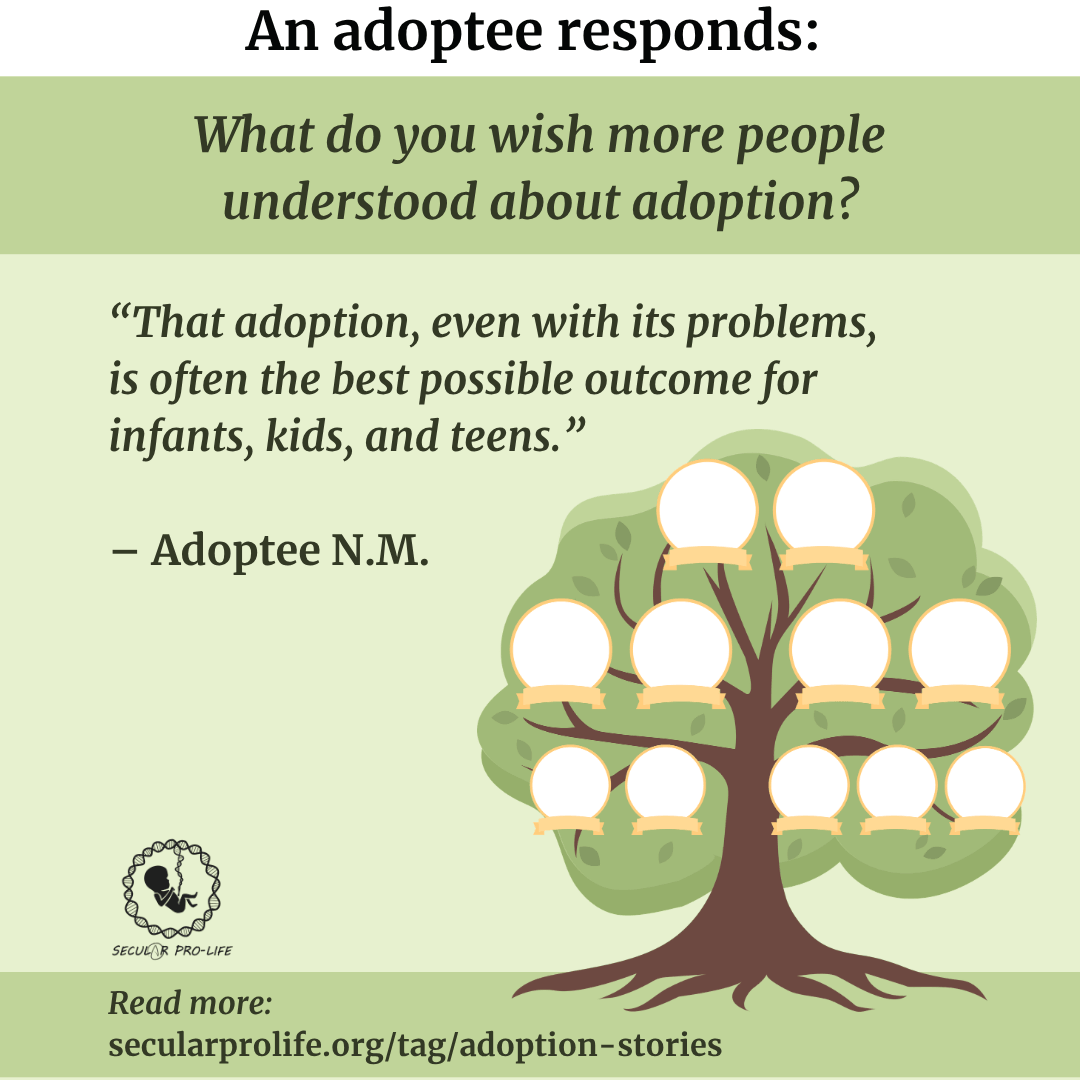
What do you wish more people understood about adoption?
That adoption, even with its problems, is often the best possible outcome for infants, kids, and teens.
In your opinion, what makes an adoption process ethical or unethical?
The adoption process is ethical in theory and a lot of times, in practice. The taking of a child from a position as a ward of the state or an unfit/abusive parent, and moving them to become a ward of a caring family, is ethical. What is unethical is moving children for money purposes, sending them to abusive/unfit homes, and not screening them for any and all health problems under the sun.
Are there specific reforms or changes you think should be made in adoption practices or laws?
I think that adoptive children should have access to a report of their biological family’s medical history, or at least any hereditary conditions (if bio family is known). This could be censored for the protection of the bio family’s identity, but adopters should be made aware, if possible, of any genetic conditions or predisposition they may have. International adoptions need to have clearer child welfare and anti-abuse laws, along with more requirements for legal documentation (if possible) so that if a child is trafficked, they can be returned to their family (unless the family is deemed unfit to have them).
How do you see adoption portrayed in public discourse? Do you feel this is accurate?
I see adoption (particularly international infant adoption, which is my situation) portrayed as 100% unethical and criminal. I feel this is inaccurate. Are there unethical and downright criminal international adoption avenues? Absolutely! Should they be found and terminated? Yes! But there are many countries with legal international adoption programs, and families should adopt international or national, whatever works for them.
Is there anything else you’d like to share about your perspective on adoption?
As an adoptee, my experience with life is what makes me pro-life. I had a physical defect in the womb, and I could have easily been aborted, but here I am. I was born early, before some abortions happen, but here I am.
Every time I see someone advocating that abortion of a disabled child or an unwanted child is truly the best thing for them, I want to cry because my life is beautiful. Despite my hardships, I would handle them 100 times over just for a chance to experience the same joy.
Any recommended resources for people who want to better understand adoption?
Adoptee Reclaimed: I don’t agree with everything she says on a personal level, but she illustrates a lot of amazing points that can help understand the mindset of an adoptee.
Not a specific resource, but I encourage people to look into the effects of adoption on kids, teens, and adults. There are a lot of mental and physical health components that are scrambled when a child is in an unfamiliar environment for their formative years, so understanding that is super important.
Research the conditions of orphans in other countries. I was in a Russian baby house, underfed and undercared for. There are permanent health problems that I have because of that. A lot of the time when people say all infant adoption is unethical, they have no knowledge of the damage that an infant orphanage can do to a child; being adopted is often a life-saving method for children.
If you appreciate our work and would like to help, one of the most effective ways to do so is to become a monthly donor. You can also give a one time donation here or volunteer with us here.