
Adoption Stories: Natalie H. – Adoptee
Conversations about adoption are often missing the voices of people who have lived it. In our Adoption Stories series, adoptees, birth parents, adoptive parents, and their families share their journeys in their own words. This month, we welcome Natalie H.

What are your experiences with adoption?
I am an adoptee.
What do you think are the most common myths or misconceptions about adoption?
That adoptees, especially international ones, are all “bought” through a black market or through trafficking. That we all either love or hate our experiences/families.
What do you wish more people understood about adoption?
It’s more nuanced than people think. There are ups and downs just like with every family, ups and downs with identity and culture much like those who struggle with identity issues.
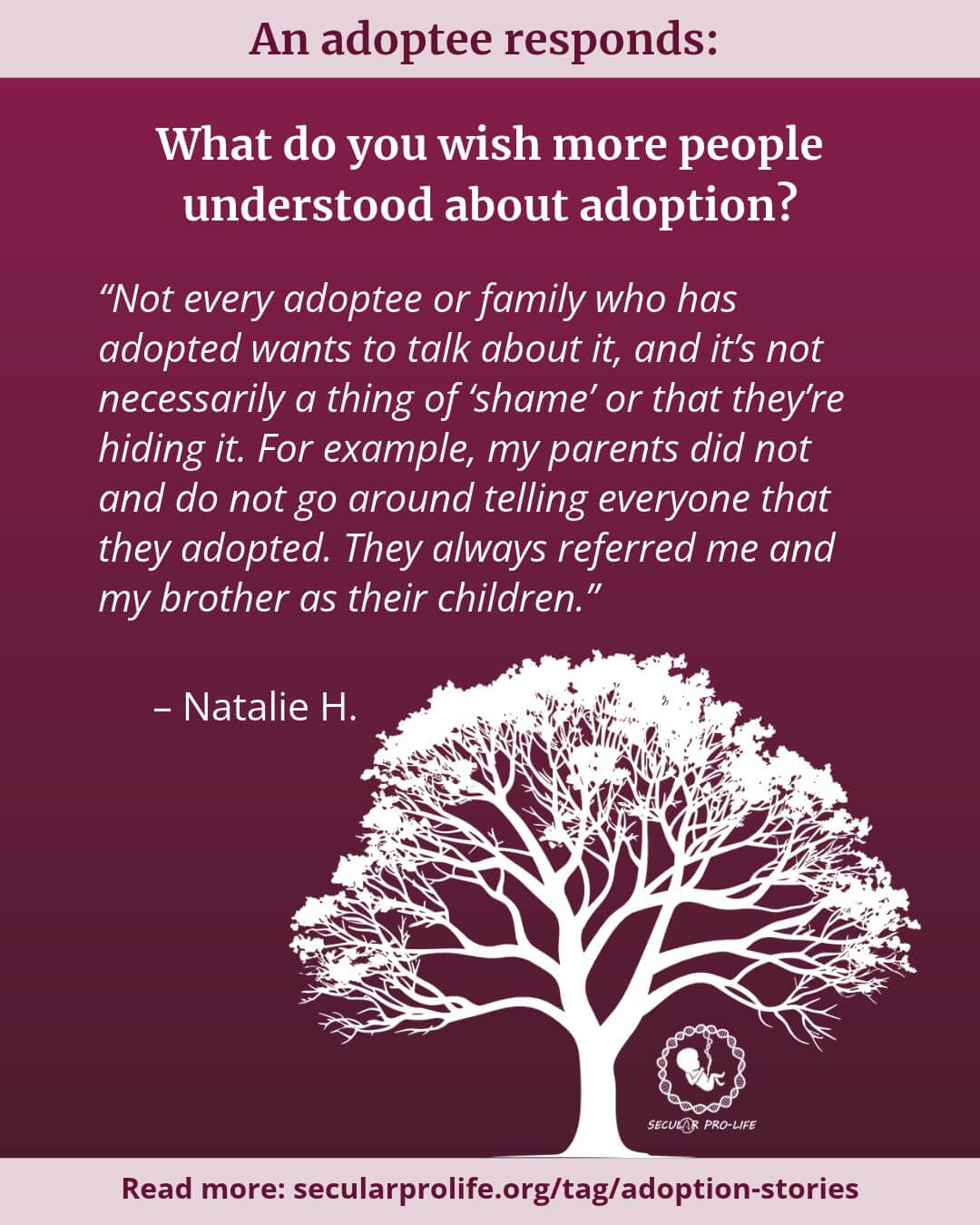
Not every adoptee or family who has adopted wants to talk about it, and it’s not necessarily a thing of “shame” or that they’re hiding it. For example, my parents did not and do not go around telling everyone that they adopted. They always referred me and my brother (not biological to me) as their children. But of course there have been times when they did. And there was never “shame” attached to it, nor ever any kind of gloating like they are special for saving us.
My parents would share their feelings with me and my brother during our conversations on the topic. They allowed us to explore who we are, where we are from at our own rate. I was on-and-off curious since my teen years and began exploring more in my 20s — had a lot of ups and downs, mainly with the adoptee communities online. I tried to be a part of various ones, but they were all very negative towards adoption and their experiences, and I decided to just keep my journey to myself or to those I feel comfortable with.
In your opinion, what makes an adoption process ethical or unethical?
I will admit I never gave this topic too much attention during my journey. But from what I know from my experience, and from what I have learned about this topic, I would say an ethical process would be one where nothing is hidden, all steps and processes are adhered to by adoption agencies, prospective families, and the law.
Are there specific reforms or changes you think should be made in adoption practices or laws?
As an international adoptee, my parents were given a substantial amount of paperwork about my biological mother and the situation I was in when they first met me. I was shocked when I learned that American adoptees weren’t (and still aren’t?) allowed to see their paperwork; it’s sealed. I will say I’m not well versed in the matter but from what I learned years ago, [it] shocked me. I thought everyone had access to that information.
[Note: Access to original birth certificates and other adoption records varies by state. Some records remain sealed or are accessible only through specific procedures.]
How do you see adoption portrayed in public discourse? Do you feel this is accurate?
I’ve seen it as two “extremes”: something to be entirely grateful for, a blessing, and a gift. On the other side, a terrible experience for the biological mother and infant/child, something to pity. They like to add that the infant/child shouldn’t be alive or valued. I don’t believe it’s entirely accurate: it’s more nuanced than either one of those extremes. In a perfect world, infants and children would never be separated from their mothers/families. Of course that is the best option for all.
Is there anything else you’d like to share about your perspective on adoption?
Like I mentioned earlier about the online adoption communities being very negative towards adoption and hating on adoptees who had “more normal” experiences. I feel like their voices are louder, but I know from experience most of us aren’t haters and don’t hate the whole process. Most of us were fortunate to be adopted by “normal” people who gave us better opportunities than we could have ever had. Yes, it’s absolutely true that I lost many cultural connections and experiences. I mourn that my own way, and I’m not bitter about it online. But I was also given other cultural experiences through my parents. They’re immigrants to America as well, so I grew up with exposure to practices of their cultures. (I’ve had good and bad experiences with that, as well).
I also have come to understand why some adoptees don’t like being told to be “grateful” for their lives. Overall, I personally don’t mind being told that, but I can understand how reading it on the internet without hearing the tone of voice can come off “condescending”.
I have come to accept that not everyone is going to understand what it feels like to be adopted. The ups and downs, good and bad. No matter how “hard” we try to show them. I never forced anyone to care. Of course there have been times I wished someone cared more (like a crush at the time, a friend at the time, etc), but I learned through my journey that we meet people where they are at, and it goes both ways.
I guess what I’m trying to say here is that online adoption communities tend to be negative, and now with everyone on the internet/social media, that might be someone’s first exposure to the community. Us “good” ones (for the lack of a better term) are out there.
Any recommended resources for people who want to better understand adoption?
“Being Adopted: The Lifelong Search for Self” by David M. Brodzinsky, et al.
“The Family of Adoption” by Joyce Maguire Pavao
“Being Adopted” is a bit dated, but it breaks down how the adoptee is affected at all stages of development from infant to late adulthood. I could relate to a lot of the information given. They do give a disclaimer saying not everyone will relate to all the information given, but that it can also be used as a guide to help adoptees, their friends, families, and others understand adoption and how it can affect an individual at all stages of their lives. “The Family of Adoption” is written by an adoptee who is a family and adoption therapist and similarly looks at how adoption affects an adoptee in the different stages of life. I learned a lot from this book as well.
I highly recommend these books!
If you are interested in sharing your experiences with adoption, please complete this survey, and if you’d like to learn how to effectively share your story, check out our free, self-paced Storytelling Symposium.
If you appreciate our work and would like to help, one of the most effective ways to do so is to become a monthly donor. You can also give a one time donation here or volunteer with us here.