

Three keys to fetal pain – Part 3: The irrelevance of cortical necessity
The way I see it, there are three keys to fetal pain. These keys apply to pain experts, since the rest of us instinctively recognize and may even feel the pain of other living beings.
The first key was the definition of pain, which the IASP revised in 2020 to include pain in animals and nonverbal humans. The second key was 4D ultrasound evidence of fetal pain behaviors.
This time, I’ll examine key #3—the clinical irrelevance and decreasing academic stature of cortical necessity.

What cortical necessity means
“Cortical necessity” is my term for the idea that a mature, connected cerebral cortex is necessary for consciousness in general and pain in particular.
From Latin, meaning “bark,” the cortex is the convoluted outer 2-4 millimeters of the brain. It’s the last part of the brain to mature, developing into the mid-20s and even late-30s.
Cortical necessity is a powerful idea – indeed, it is the crux of the academic debate on fetal pain – but it’s more of an axiom than a falsifiable scientific theory. The philosophy crystallized in this axiom guides the focus of fetal pain research, whether it is done on living or dead fetuses.
Pro-choice organizations focus on the dead
Pro-choice medical organizations prioritize research performed on dead fetuses. The cortex can be identified histologically around 8 weeks’ gestational age (GA). But because these organizations believe a mature, connected cortex is necessary for pain, and because neurons connecting the cortex to the thalamus are not in place before 24 weeks, they assert that fetal consciousness and pain are not possible before what I call a supposed “consciousness barrier” of at least 24 weeks—or perhaps 28 weeks, “29 to 30 weeks, based on the limited data available,” “late in the third trimester,” or even “approximately 12 months of age.” There’s not a lot of consensus.
NICU specialists focus on the living
By contrast, clinicians in neonatal intensive care units (NICUs) treat living babies for signs of pain even at 22 weeks, well before the “consciousness barrier.” They offer this care without regard to the cortical status of their tiny patients.
During fetal surgery, clinicians treat pain even earlier. As Thill (2023) notes,
Fetal surgeons administer direct fetal analgesia and anesthesia as early as 15–16 weeks gestation (7, 8). Fetal anesthesiologists recommend the use of fetal anesthesia from the second trimester onward (>14 weeks gestation) (9), or in all invasive maternal-fetal procedures regardless of gestational age, in order to “inhibit the humoral stress response, decrease fetal movement, and blunt any perception of pain” [(10), p. 1167]

The Society of Maternal-Fetal Medicine (2021) suggests that the onset of fetal pain capacity is no earlier than 24-25 weeks to the “early third trimester”—presumably weeks 27 to 33—due to “lack of functional connections between cortical structures.”
The American College of Obstetricians and Gynecologists (2022) mirrors SMFM’s broad timeline, suggesting pain can arise no earlier than 24-25 weeks, when brain “connections and structures” are present, but possibly “third trimester at the earliest” (27 or 28 weeks until 40 weeks), or perhaps “late in the third trimester” (presumably 34 weeks or later) when “neural circuitry necessary to distinguish touch from painful touch” supposedly develops.
The Royal College of Obstetricians and Gynaecologists (2022) proposes the narrowest window for the onset of fetal pain capacity: 28 weeks, when “key features of the functional connectome” are present, or perhaps 30-31 weeks with “a shift from endogenous neuronal activity to sensory-driven cortical patterns” occurs.
To put it bluntly, cortical necessity is clinically irrelevant.
More evidence against cortical necessity
Cortical necessity also seems to be factually wrong. Several studies have inadvertently called the concept into question. One from 2016 showed cortical activity on brain imaging without pain; another showed increased pain in a man without the supposed pain centers of his brain, with no demonstrated cortical activity at all.
In other words, the cortex serves to modulate or dampen pain, not enable it.
Despite the objections of the two pro-choice authors of these studies, their combined research is a classic example of double dissociation, a neuroscientific research method comparing two patients with opposite symptoms. One loses function A but keeps function B, and the other loses function B but keeps function A. Here, functions A and B are pain experience and cortical activity. The researchers seem to have neatly separated the two.
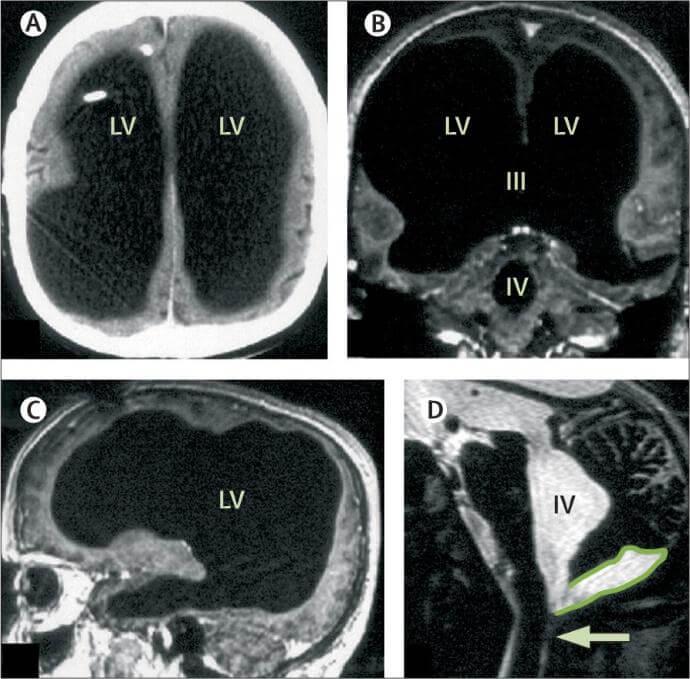
Likewise, Swedish neuroscientist Bjorn Merker found that hydranencephalic children—children born without cerebral cortexes—show personality, preferences, and sensitivity to pain.
“The tacit consensus concerning the cerebral cortex as the ‘organ of consciousness,’” he concluded, “may in fact be seriously in error.”
Life without a cortex
No one wants to live life without a cortex, but it appears to be possible. In fact, the brain is so redundant that even with minimal or no cortexes, animals can lead functional lives and appear normal to observers.

Studies of humans have revealed much the same, provoking brain researchers to ask, “Is the cortex necessary?” and “Is a cerebral cortex even necessary to instantiate an experience of pain?”
Not just functioning but high-functioning individuals have been found lacking up to 95% of their brains, leading Science News Editor Roger Lewin to ask in exasperation, “Is your brain really necessary?”
Noting some of the evidence above, one eminent pediatric anesthesiologist asked, in his testimony before Congress: “If cortical activity is not required for pain perception in adults, why should it be a necessary criterion for fetuses?”
Indeed. And because the fetus from 20 to 32 weeks’ gestation has a higher density of pain receptors per square inch than she will have at any point in her life – at the same time her brain has not yet developed pain-dampening neurons – she may feel pain more intensely than at any point in her life.

Responding to Objections
Cortical necessity adherents generally advance two objections. Each one reveals the weakness of the case for cortical necessity.
Objection 1: “You are conflating nociceptive reflex with pain.”
Measurable distress clusters–vital sign spikes, stress hormones, and withdrawal and facial movements, in context of injury–are merely “subcortical reflex arcs” (nociception), which lack a conscious, emotional counterpart (pain)
But the logic doesn’t hold, and it’s circular.
- Adults have nociceptive reflexes and pain; reflexes do not rule out consciousness.
- Reflex is assumed because the cortex isn’t mature; the cortex isn’t mature, so all response is assumed to be reflex. But this is axiomatic; definitional. Semantics, not science.
- Part 2 addresses this head-on, quoting Castiello and colleagues (2010): “Reflexes are not goal directed, are not subject to learning and do not adjust to future states in a prospective fashion.” All of these were found in their study of 14-week fetuses.
A good question to release the definitional deadlock of cortical necessity: “What evidence would convince you otherwise?”
Objection 2: “Adult anomalies rely on neuroplasticity that a fetus hasn’t developed.”
Critics will claim that hydranencephalic children or adults missing 95% of their brain mass can function only because of “neuroplasticity:” their brains had years of postpartum stimuli to slowly re-wire alternate pathways. A 16-week fetus, they claim, has not had enough time or stimuli.
But this backfires:
- It assumes the conclusion. “Neuroplasticity” is a black box, an inference, not a magical wand. It involves mechanisms we do not understand and have simply inferred. But we do know the brain is maximally plastic in the fetal period, so if neuroplasticity applies to adults, then it applies maximally to fetuses.
- No one knows how much time or what stimuli are needed for neuroplastic mechanisms to occur in a fetus or an adult, but we do know the fetus is developing rapidly in a rich sensory environment. Time and stimuli are ad hoc objections that apply to both if they apply to either.
- If subcortical structures and slivers of cortex enable consciousness and even increased pain, then the cortex was never a prerequisite.
A cause for stewardship
Clinicians increasingly know what pain theorists are stumbling toward: cortical necessity is not only irrelevant but also seems to be false. An immature cortex, then, is no reason to deny fetal pain. It is actually reason to err on the side of caution, honing to our universal standard of human rights that protects our own species from the very beginning.
If you appreciate our work and would like to help, one of the most effective ways to do so is to become a monthly donor. You can also give a one-time donation here or volunteer with us here.