
SPL Supports Pregnancy Centers at Supreme Court
If you’re a pro-abortion attorney general, and all nine Supreme Court justices rule against you, you know you’ve screwed up.
The saga begins in New Jersey, which is extremely friendly to the abortion industry. Like every state, New Jersey is home to many pro-life pregnancy resource centers that help families in crisis choose life. And despite the constant whining from abortion supporters that pro-lifers don’t do enough to meet mothers’ practical needs, they hate it when we actually do. Pregnancy centers are Planned Parenthood’s competition, you see. Can’t have that.
So the attorney general of New Jersey targeted First Choice Women’s Resource Centers. But he quickly ran into a problem: filing a lawsuit against First Choice would require evidence that First Choice had done something wrong. And try as he might to stir up controversy with a baseless “consumer alert,” no women came forward with any complaints.
His solution? Issue a subpoena to First Choice demanding that they disclose their donors’ names, phone numbers, addresses, and places of employment. (Remember that the next time an abortion activist lectures you about the “right to privacy.”) Pregnancy centers do not charge for their services; scare off donors, and they’ll be forced to close.
New Jersey’s approach was reminiscent of how the state of Alabama tried to intimidate the NAACP — which the Supreme Court soundly rejected in 1958. On the authority of the NAACP case, First Choice promptly sued in federal court to vindicate their First Amendment rights. New Jersey threw up a procedural obstacle, arguing that the subpoena had to be litigated in state court.
Secular Pro-Life proudly joined an amicus brief in support of First Choice Women’s Resource Centers. I encourage you to read the whole thing, but if you only have time for one paragraph, make it this one:
[Forced donor disclosure] does not operate in a vacuum; it functions within a social context where dissenters are punished. The reprisals are not speculative but actual, and disclosure magnifies the chilling effect on those who dissent from prevailing orthodoxy. The First Amendment does not require citizens to risk their livelihoods, reputations, or safety to participate in the debate over abortion; in fact, its promise of associational freedom exists precisely to protect such voices. See West Virginia Bd. of Educ. v. Barnette, 319 U.S. 624, 642 (1943) (“Freedom to differ is not limited to things that do not matter much.”). Protecting anonymity, particularly for disenfranchised or marginalized supporters, is essential to ensuring that minority voices remain audible and safe in public discourse.
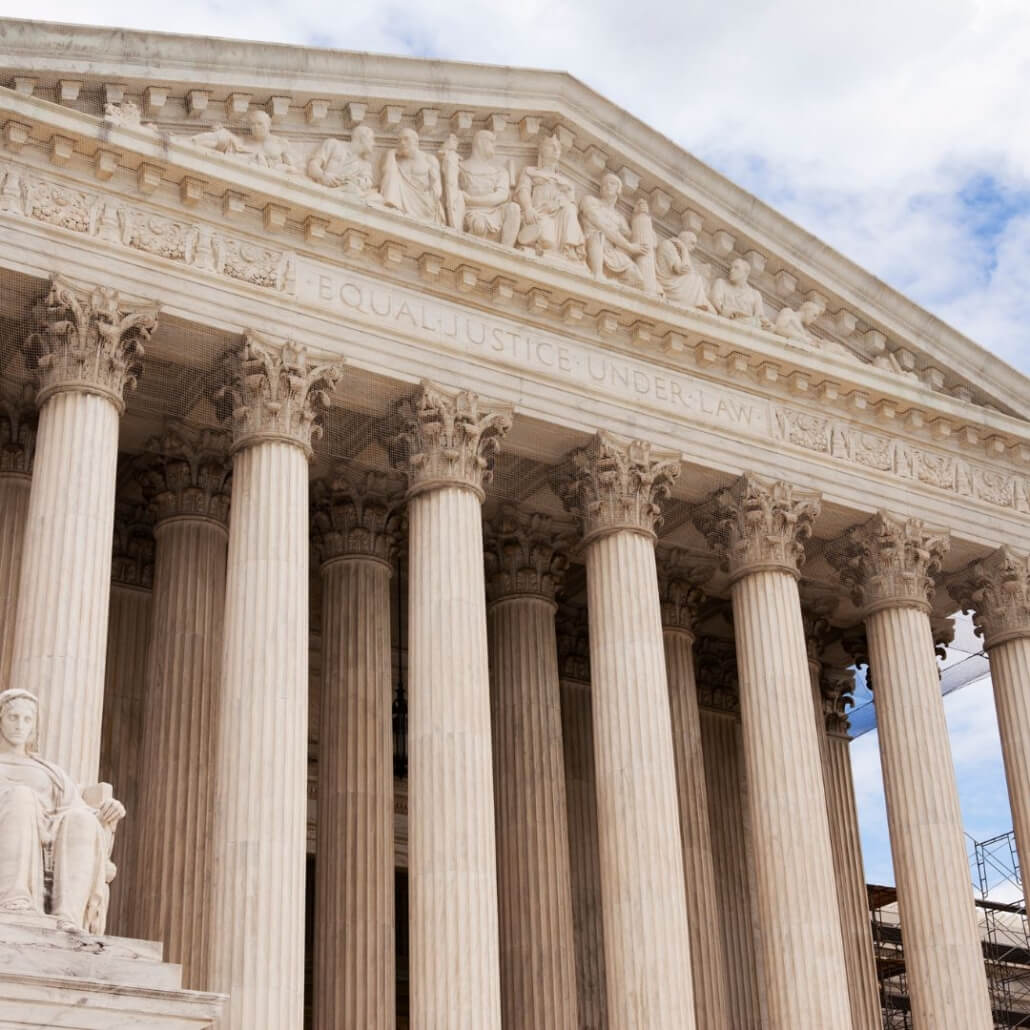
The Supreme Court agreed. In a unanimous decision, the Court ruled that First Choice had shown a First Amendment injury sufficient to warrant proceeding in federal court. Although the case was remanded to the lower court for further proceedings – meaning it is technically not yet over – it is hard to imagine a scenario where the Attorney General of New Jersey prevails.
We are proud to have played a small part in this outcome. The biggest winners are the New Jersey babies whose lives will be spared from abortion, the mothers and fathers who will receive free support, and the hardworking pregnancy center donors and volunteers who are free to improve their communities in peace.
If you appreciate our work and would like to help, one of the most effective ways to do so is to become a monthly donor. You can also give a one time donation here or volunteer with us here.