
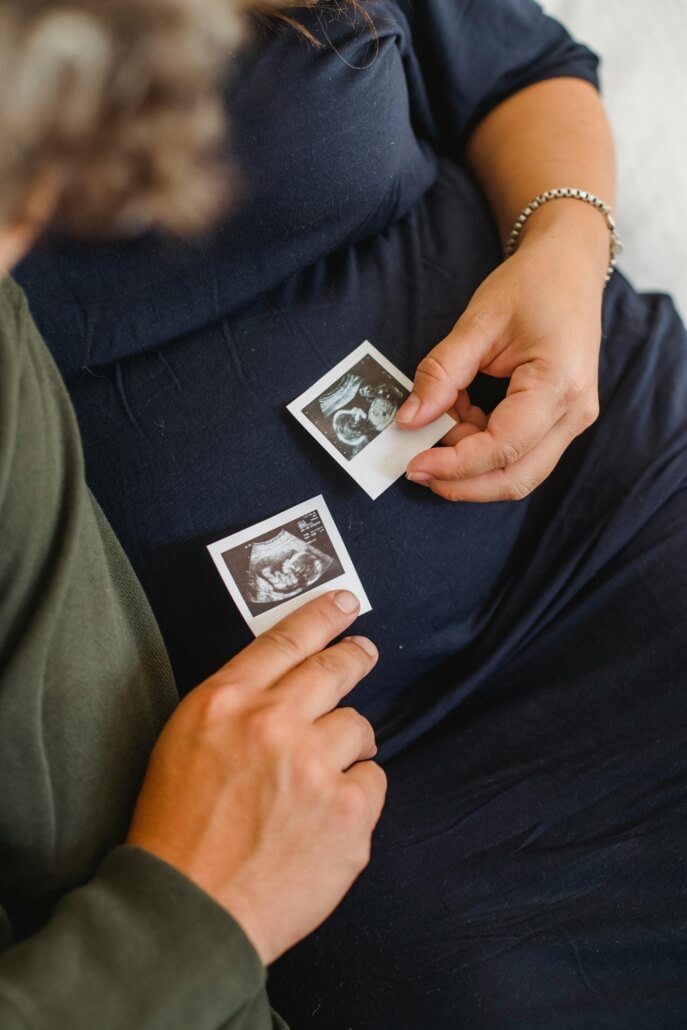
 credit: Pexels-Amina-Filkins
When there’s a prenatal diagnosis, the medical community often pressures parents to abort.
[This article is a transcript of “When there’s a prenatal diagnosis, the medical community often pressures parents to abort.” courtesy of volunteer Ben Tomlin. A few minor changes were made for clarity. If you’re interested in volunteering to transcribe more of our content, please complete our volunteer survey.]
The medical community frequently pressures parents who receive a prenatal diagnosis to abort. There’s research to show that a significant number of physicians, genetic counselors—whoever—will self-report that they will emphasize the negative aspects of a diagnosis in order to indirectly pressure parents to abort, or they will just overtly tell them, “You should abort.”
To add more depth to this data, I’m going to read quotes from this qualitative study of mothers who got a prenatal diagnosis of Down syndrome and did not abort, and what their experiences were like:
One mom reports that the OB said, “You have to move quickly. There is a doctor at blah-blah Hospital who does late-term abortions.” The mom replied, “No, I told you I’m not going to have an abortion,” and the OB said, “Well, talk to your husband. You might want to think about it.”
Other moms reported medical teams saying things like, “This child will not accomplish anything. Everyone in my practice has aborted.”
One mother reported that her OB said, “I’m giving you five days to decide which day you will terminate. Call me and I’ll book it.” This was without them having any conversation about whether she wanted an abortion.
Another reported that her geneticist’s office said it was too late for an abortion in her own state but, “I can get you on a plane to another state if you leave by 4:00 p.m. today.” Again, this was as she was getting the diagnosis, without her giving any indication that she wanted an abortion, much less a later abortion.
The most frequently reported negative experience was meeting a clinician who assumed the mother would terminate the pregnancy. When the mothers expressed dissent or ambivalence, it often was met with resistance, disbelief, or lack of support.
One mother reported that her OB turned on his speakerphone to consult with another physician who, upon hearing that the family had decided to continue the pregnancy, said, “What are they, Mormons or something?”
Another mother reported that her genetic counselor—whose literal job is to help families understand these results and their options—said to her, “What are you going to say to people when they ask you how you could bring a child like this into the world?
Mothers reported that they felt more positive when they were able to talk about realistic expectations for their babies with physicians and other clinicians who were well informed about Down syndrome—no big shock there. Other things that mothers reported as helpful included the Down Syndrome program at Children’s Hospital giving them up-to-date books and pamphlets; they said the information was valuable in their preparation for parenting their child with Down syndrome. Another helpful resource was meetings or phone conversations with parents who had children with Down syndrome, which they described as a great source of support and information.
Offering these resources should be standard when clinicians deliver prenatal Down syndrome diagnoses. Unfortunately, they often are not. This is a qualitative study from 1998, but it echoes themes that we’ve seen recurrently all the way up to today. To mitigate some of these biases, an interdisciplinary committee—including people with disabilities—came up with 20 recommendations for decreasing these problems when clinicians give prenatal diagnoses. Check out this paper, which gives a bunch of ideas, regardless of your feelings about abortion generally, on how we can minimize the ableism and pressure that the medical community puts on parents who get prenatal diagnoses.
If you appreciate our work and would like to help, one of the most effective ways to do so is to become a monthly donor. You can also give a one time donation here or volunteer with us here.