
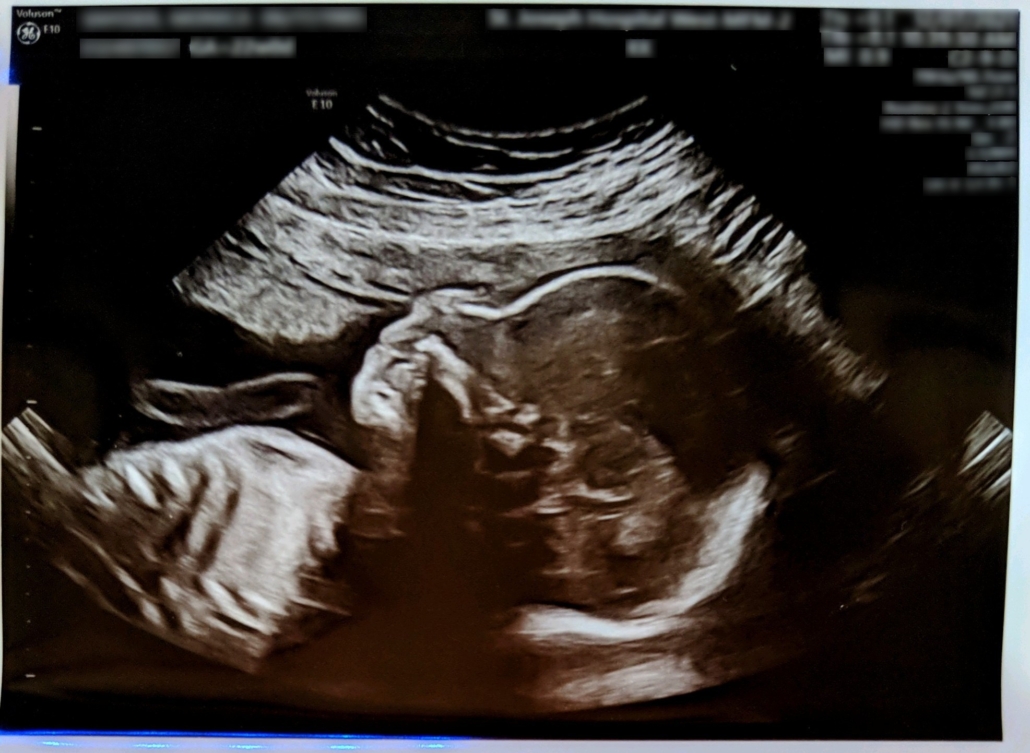

Study: fetuses show consciousness in second half of pregnancy
Do fetuses have sensory experiences?
In the ongoing discussions about fetal pain and fetal consciousness, some groups have argued fetuses have no sensory experiences throughout all of pregnancy. They say the neuroinhibitors in fetal blood continually sedate them, so they aren’t likely to experience pain (or anything else) until they’re born. Some abortion advocates use this argument to explain why premature infants would feel pain, but fetuses of the same age still in utero would not. Similarly, some abortion advocates make arguments like these when they try to draw a bright line between newborns, who they consider persons with full rights and value, and fetuses, who they describe as “potential” persons, not yet meriting the same level of care and protection.
In January 2026 an international gynaecology journal published the review “A Rudimentary Consciousness Appears in the Late Fetal Period” by Carlo Bellieni. Here Bellieni argues that the “minimum common denominator” of consciousness is memory, and so he looks for studies of fetal memory. He also evaluates research regarding fetal anatomy and perception. In total, he reviews 31 clinical trials from the last decade related to these three areas, and concludes there is significant evidence for forms of consciousness before birth.
[Read more – A Primer on Fetal Personhood and Consciousness]
What does the evidence suggest?
Fetal Anatomy
Bellieni summarizes 10 studies that focused on the “anatomic pathways that make consciousness available.” He discusses how humans begin developing thalamo-cortical fibers as embryos, and the connection between thalamus and cortex strengthens in the second half of pregnancy. He talks about the subplate, a temporary part of the brain during early fetal development that plays a vital role in neural development during pregnancy. In particular, Bellieni emphasizes that fetuses don’t need a mature cerebral cortex to experience sensations. They have temporary structures, like the subplate, that allow sensory experience even before the cortex is fully formed.
Intrauterine life includes structures which, at least partially, replace the developing cortex, that the fetus begins to form around 20 weeks of gestation. These structures are the subplate, useful for most sensations, and the thalamus for pain. … We can realistically say that the first sensations are perceived by mid-pregnancy.
Carlo Bellieni
RCOG and others have argued fetuses may have no sensory experiences throughout all of pregnancy because they are continuously asleep, with neuroinhibitors in their blood that sedate them. Bellieni cites research contradicting this idea, including studies showing fetuses have different behavioural states (distinct periods of behaving “asleep” and “awake”) and studies suggesting the neuroinhibitors in fetal blood are too low level to cause continuous sedation.
Fetal Perception
Bellieni gives an overview of 15 studies that focused on fetal and neonatal perception, including studies of fetal responses to sound, taste, and touch. For example, apparently fetuses like carrot-flavored amniotic fluid more than the kale-flavored kind. They also respond more to “face-like” visual stimuli (light shown through the uterine wall) than other kinds, and they touch the inside of the uterine wall longer when their mother is touching the outside.
Fetal Memory
Bellieni reviews six studies that looked at fetal memory. Magnetoencephalography measures brain activity through sensors that pick up changes in magnetic fields when neurons fire. Researchers can adapt this process for fetal brain imaging by placing sensors on the woman’s abdomen, measuring in real time when and where neurons are firing in the brain.
With this technique, they’ve found in the month or so before birth fetuses “learn second-order regularities,” which means they can detect relationships between events. In one experiment researchers played four tones and measured fetal brain activity during the third and fourth tones. For fetuses 35 weeks and older, if the fourth tone broke a previous tone pattern, their brain activity increased. In other words, they noticed something unexpected. This is a form of memory, going beyond simple reactions to one event at a time.
Research also finds that newborns will react differently to stimuli they experienced in utero than newborns who had never experienced it, demonstrating another form of memory.
Human cognition develops on a continuum.
Many people accept elective abortion for first-trimester embryos, and oppose it for second- and third-trimester fetuses. Shrimp-like embryos don’t trigger protective instincts the way baby-like fetuses do. That reaction is understandable, but it’s not grounded in neurodevelopment.
Some abortion advocates aruge for legal cutoffs (e.g. 20 weeks, viability, or birth) based on the idea that, prior to their preferred limit, fetuses lack sufficient cognitive ability to count as people.
But as Bellieni’s review shows, our neurodevelopment doesn’t follow bright-line cut offs. It begins early in pregnancy and continues (rapidly) through toddlerhood and (more slowly) into our early twenties.
[Read more – Personhood based on human cognitive abilities.]
Moreover, the cognitive abilities that define us as humans (e.g. normative moral reasoning, metacognition, or narrative self-identity) don’t begin until well after birth. Cognitive ability therefore can’t explain why killing embryos and early fetuses would be morally neutral, but killing later fetuses and newborns would be an abomination.
If you appreciate our work and would like to help, one of the most effective ways to do so is to become a monthly donor. You can also give a one time donation here or volunteer with us here.