

Records Raise Questions About Possible Live Dissection in New Jersey Abortion Case
Content warning: This article describes a later abortion procedure and includes graphic medical details about fetal death. Reader discretion advised.
In late May 2026, the Center for Medical Progress released a documentary titled What Happened to Clementine? The film examines what happened to Clementine Kearns, a fetus at 5 months’ gestation, after her mother allegedly faced coercion into a later abortion at the Cherry Hill Women’s Center in New Jersey. The documentary exhibits medical records that, according to the filmmakers and two consulting physicians, raise questions about whether Clementine survived the procedure before clinic staff transferred her to a fetal tissue procurement company.
The documentary presents five points that Dr. Kathi Aultman and Dr. Catherine Wheeler, both former abortion providers, reviewed and discussed on camera. We outline each point here with supporting documentation from the film.
1. The clinic did not administer feticide before the procedure
Medical records from March 12, 2024, the first day of the procedure, show an ultrasound with a gestational estimate of 20 weeks that detected fetal cardiac activity.
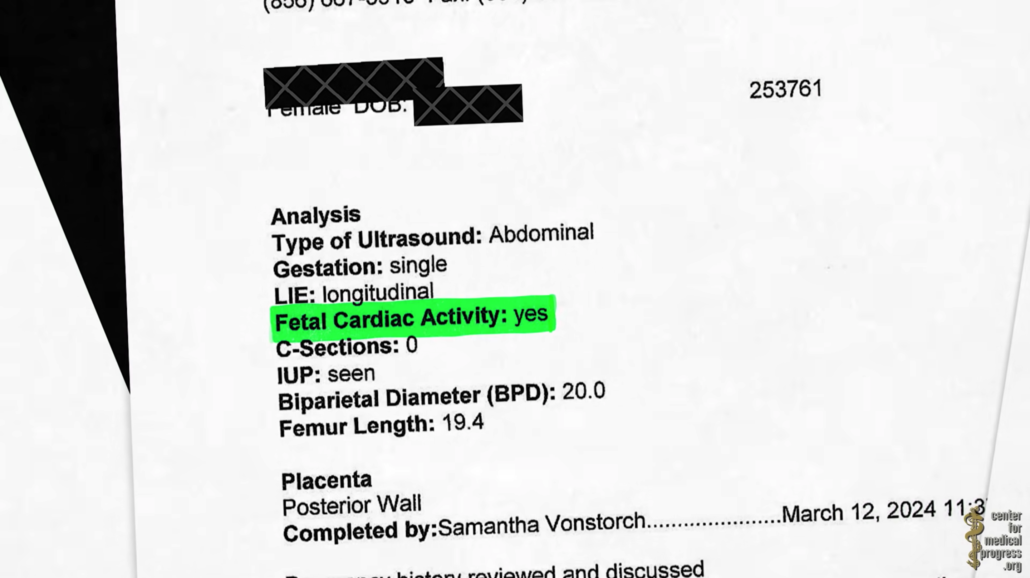
Dr. Wheeler told the filmmakers, “They’re saying they actually see heart motion. So, the baby’s alive.”
A later record states that the clinic did not induce fetal demise.
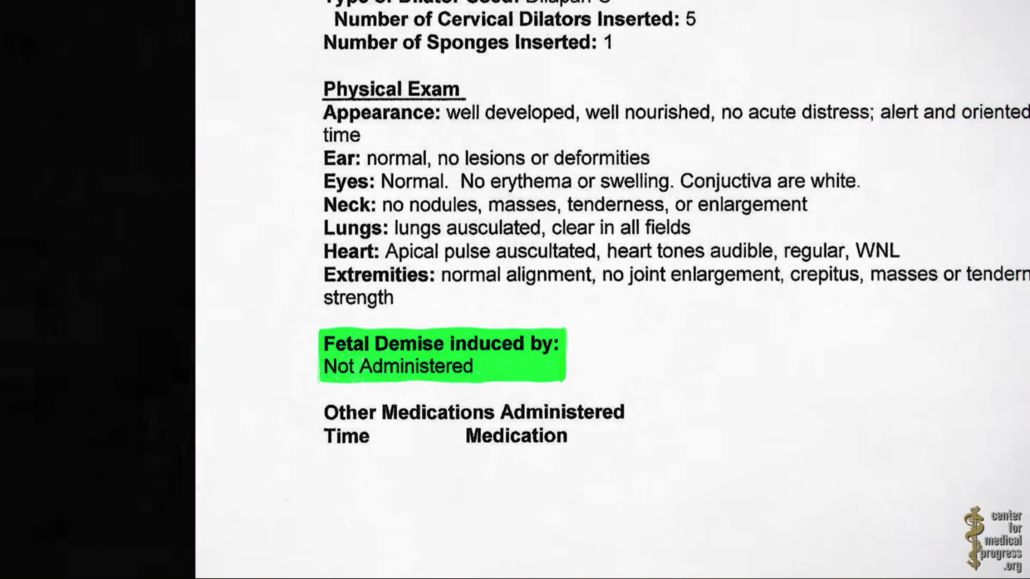
Dr. Wheeler noted that the absence of this step meant staff took no action to confirm the fetus would not survive.
On day two, staff gave Clementine’s mother 600 micrograms of misoprostol, a drug that induces labor.
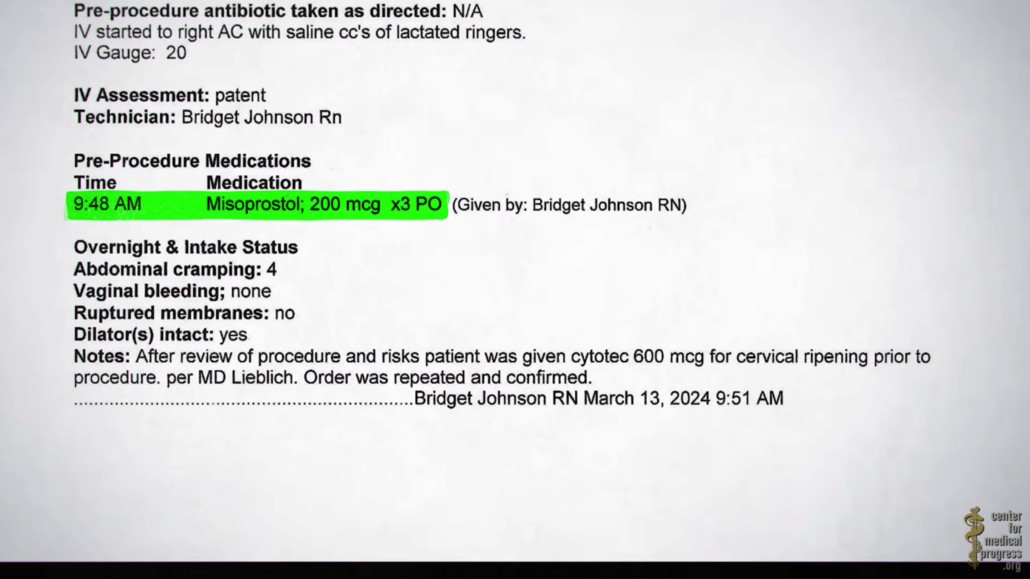
Dr. Aultman said the dose may have aimed “to bring on contractions, to over dilate the cervix, and possibly cause a spontaneous birth”.
She pointed to a study on high-dose misoprostol in later abortions that found a high rate of transient fetal survival after this approach.
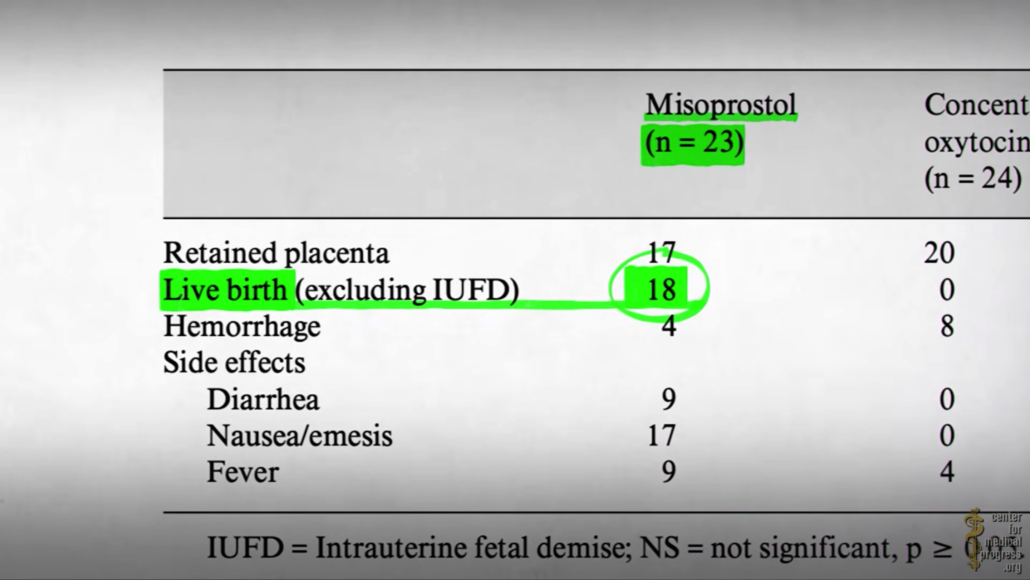
CMP’s review of the study found that virtually all of the procedures performed under this protocol on live fetuses resulted in live births.
2. The operative report lists no forceps used during extraction
The day two operative report lists only a 12 mm aspiration cannula as the tool inserted into the uterus.
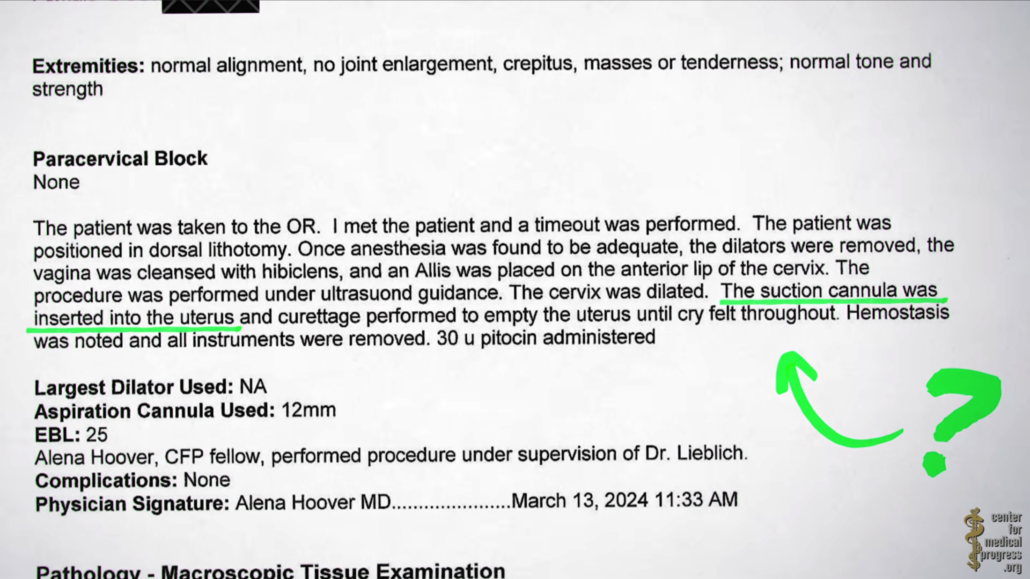
Dr. Aultman said this size cannula is “what you would use on a 12 week pregnancy… There’s no way that baby just went into the cannula.” She raised two possible explanations for the lack of forceps: “I suspect either the baby was expelled completely, or, at a minimum, the feet were visible, and they could just pull on the feet without having to use a clamp [forceps]–just pull on the feet, and deliver the baby.” The records do not specify.
3. The documented timeline shows roughly one minute between procedure preparation and completion
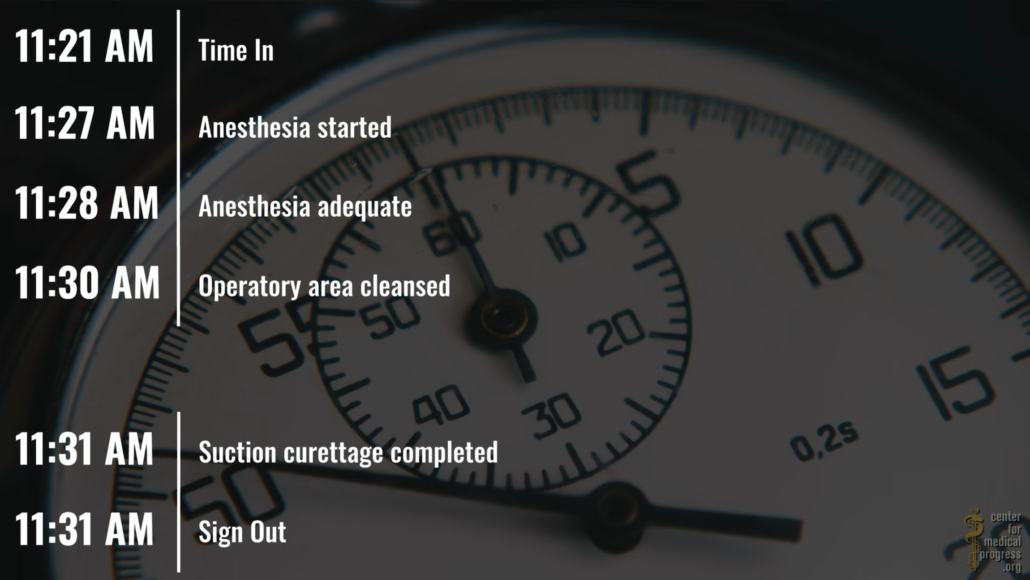
According to the operative record, staff brought Clementine’s mother into the operating room at 11:21 AM.
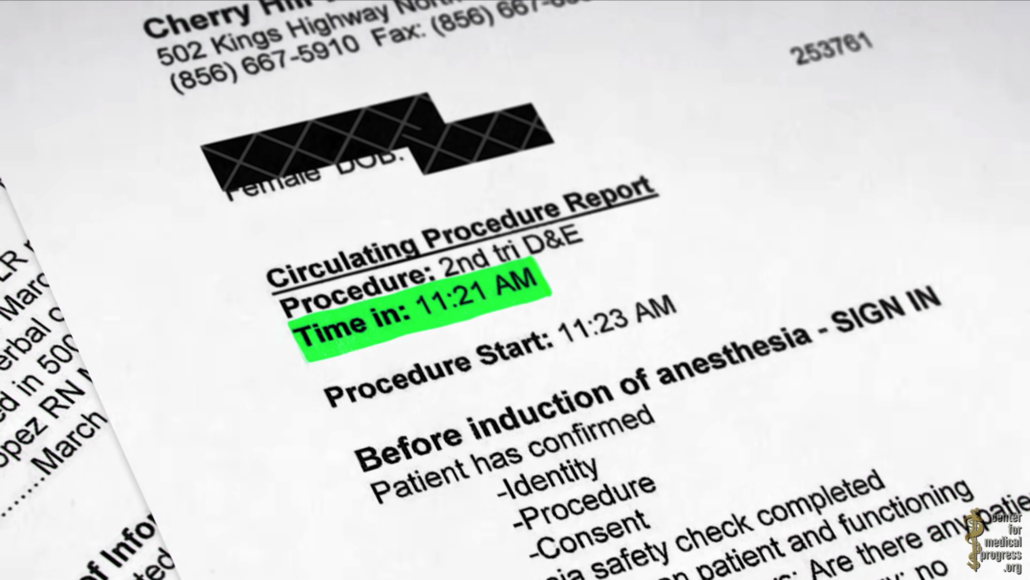
They administered anesthesia at 11:27 AM and a second dose at 11:29 AM. Dr. Aultman estimated that the anesthesia was adequate by 11:28, “at the earliest.”
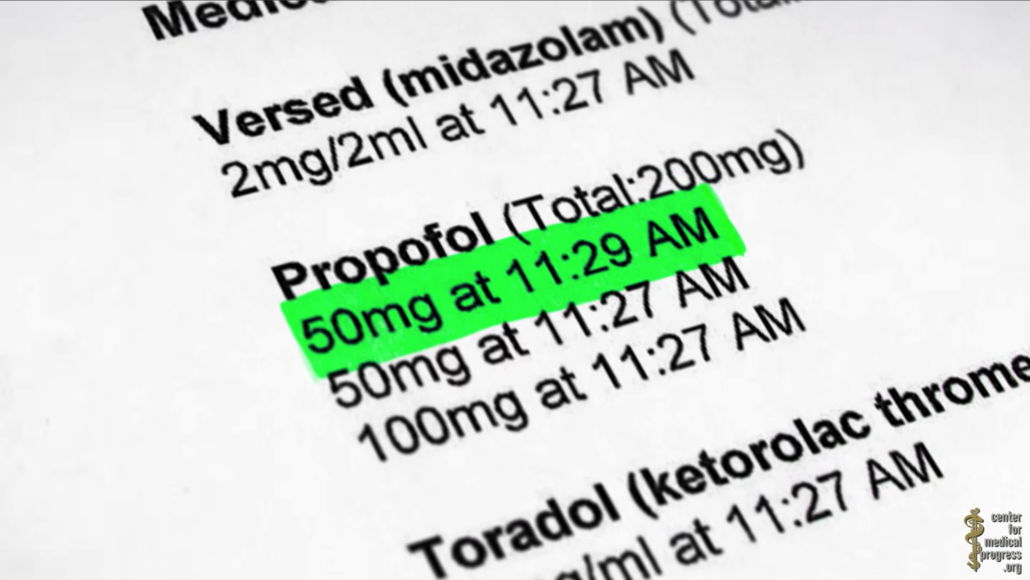
They did not remove the dilators until it was adequate. They then reportedly cleansed the operating area, which Dr. Wheeler said takes about two minutes to sterilize properly.
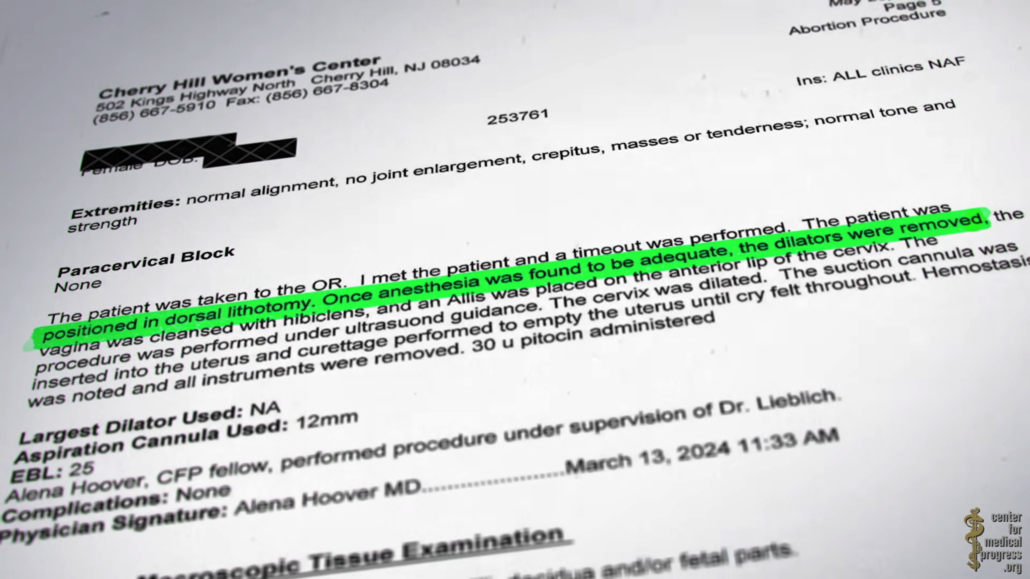
The procedure ended at 11:31 AM, when a suction curettage was completed to remove any remaining tissue; Dr. Wheeler stated that this would take “a few minutes”.
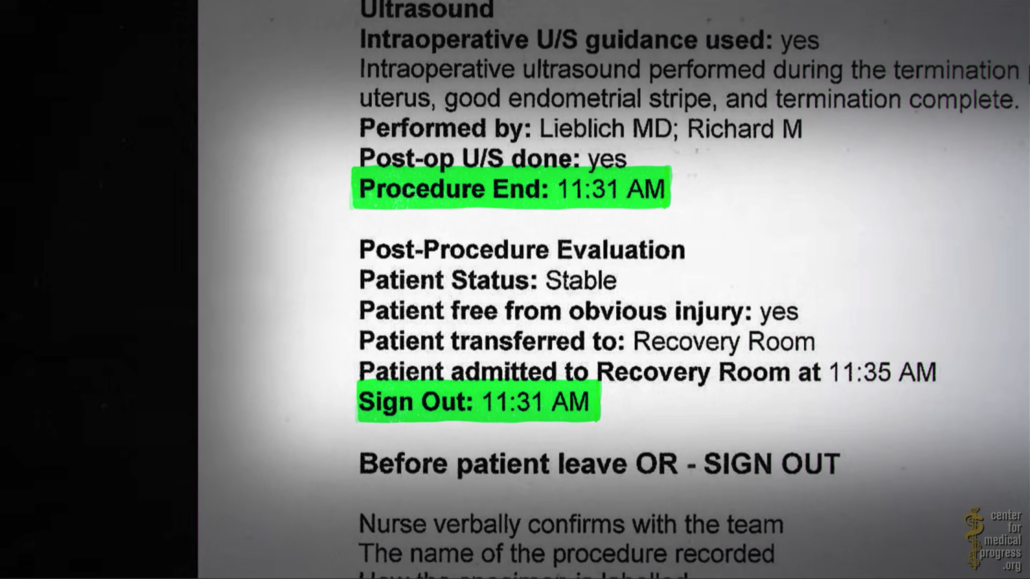
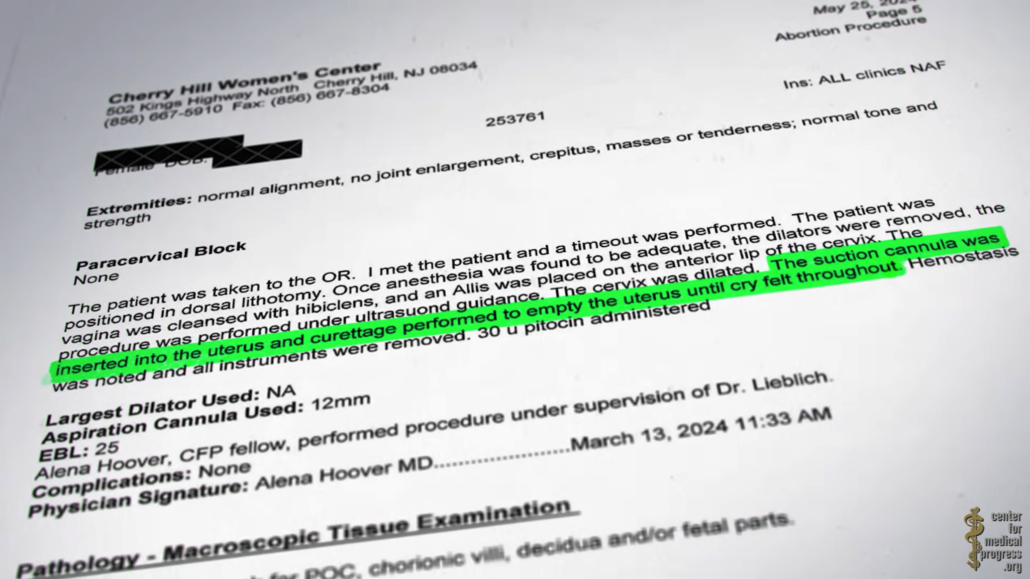
This timeline leaves less than one minute between the cleansing and the curettage for Clementine to have been extracted from her mother. The records do not explain this discrepancy.
“You’d only have one minute to do a dismemberment abortion,” Dr. Aultman calculated, “and the average is 10-30 minutes [to perform that kind of abortion].” Dr. Wheeler affirmed, “I don’t know how they would do a dismemberment-type D&E [dilation and extraction] in that period of time on a 20-week baby. I have no idea how they’re gonna do that.”
4. The clinic transferred Clementine to a tissue procurement company
While in active labor and being wheeled to the operating room, Clementine’s mother was asked to sign a consent form for donation of tissue to Cercle Allocation Services.
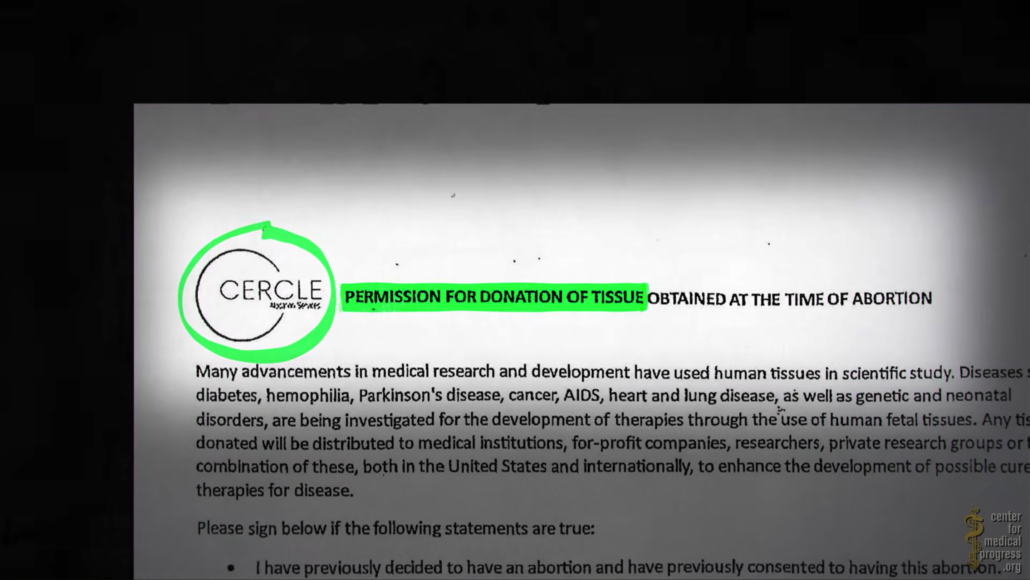
The only documented step after the procedure shows a transfer to “ABR STUDY”.
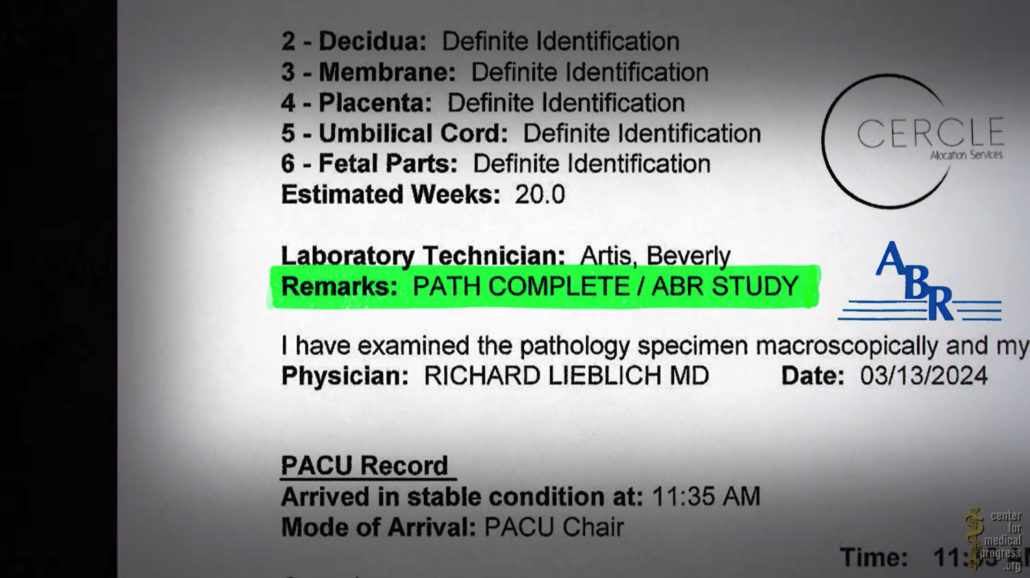
By cross-referencing company documents with recently published studies, filmmakers found that Cercle is a rebranded version of Advanced Bioscience Resources (ABR), a company that has procured and sold fetal tissue since 1989. Cherry Hill has served as a collection site for ABR and Cercle since at least 2014.
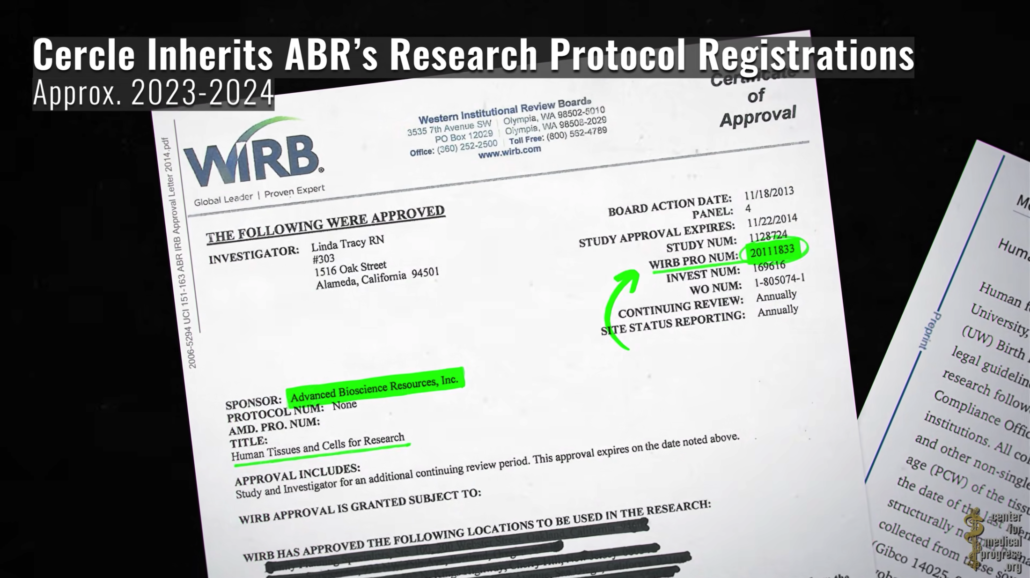
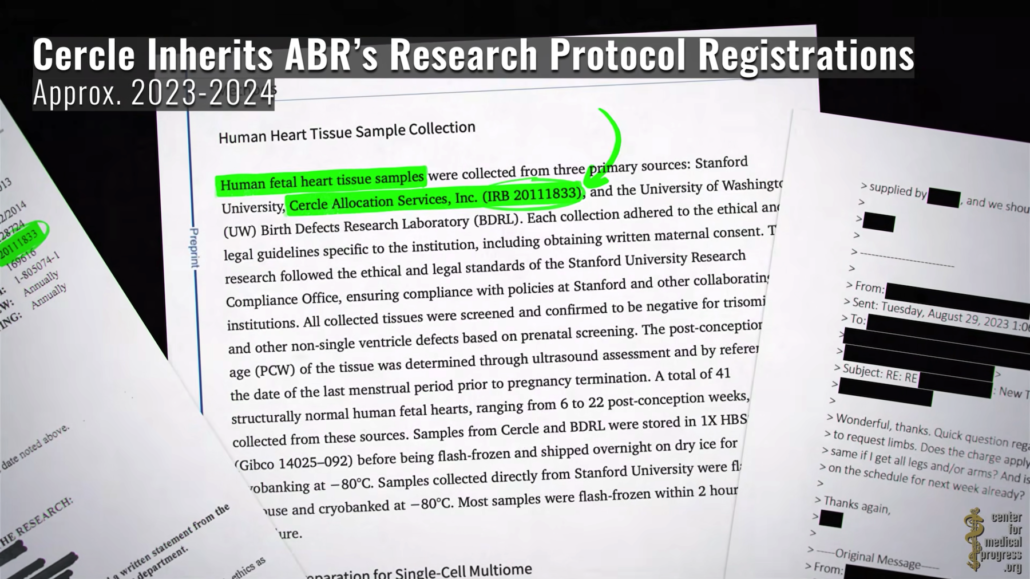
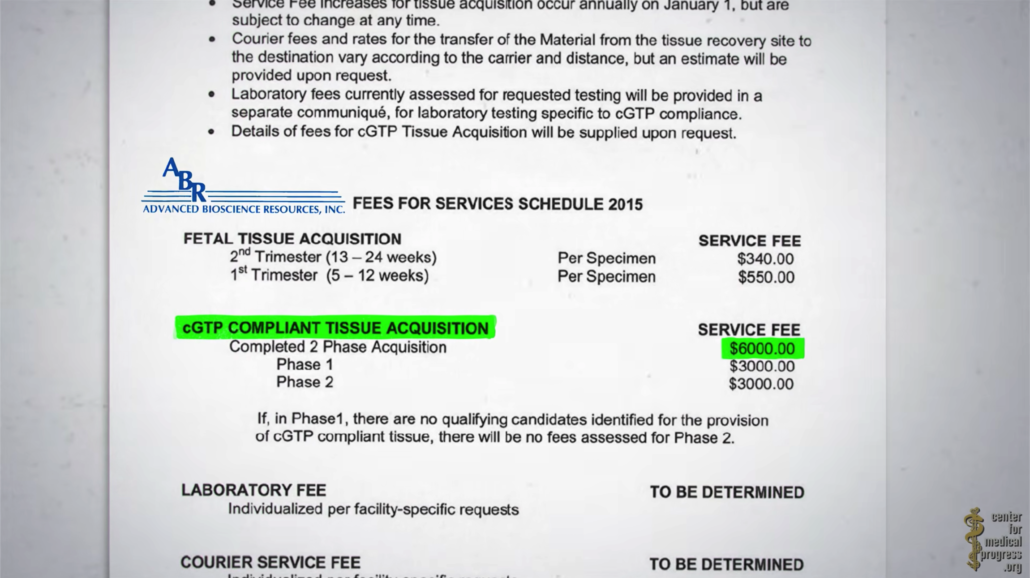
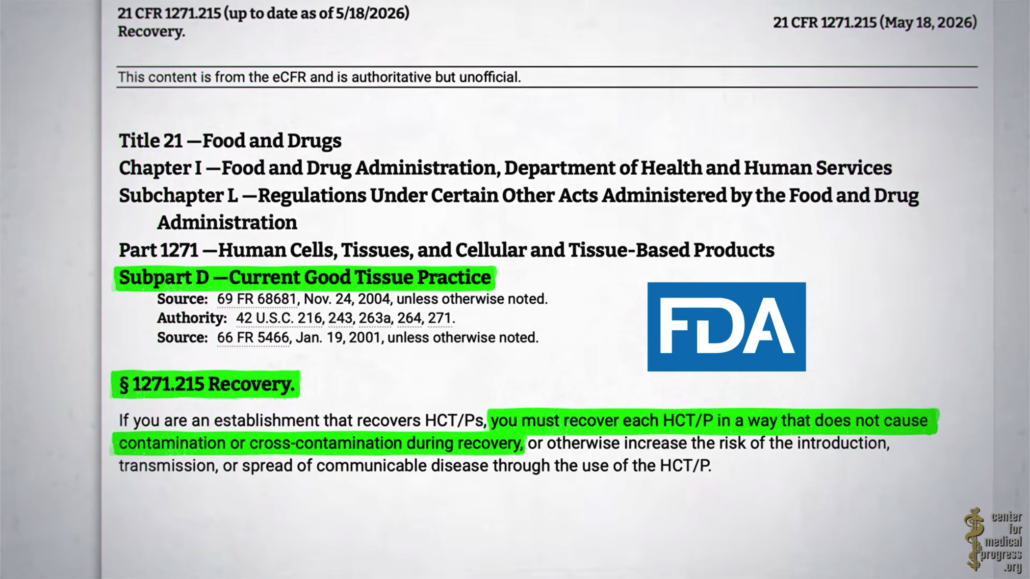
ABR’s fee schedule, shown in the film, lists payments up to $7,000 per sample under federal “Current Good Tissue Practice” standards, which require sterile recovery methods—most feasible when dissecting out of an intact fetal body.
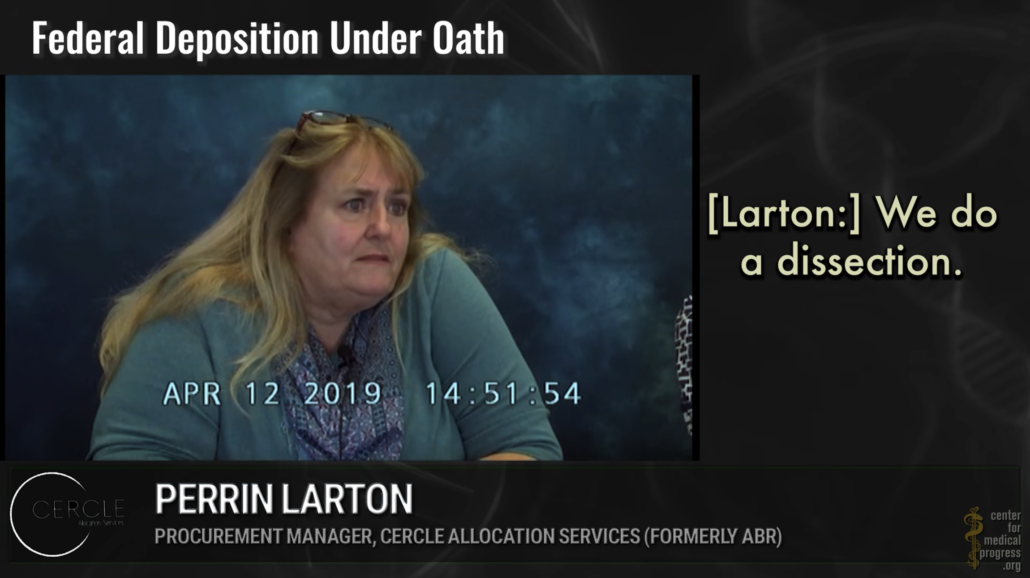
In a 2019 federal deposition shown in the documentary, Cercle procurement manager Perrin Larton described the company’s process when a fetus is delivered intact: “We do a dissection.”
5. Cherry Hill and Cercle have not provided custody records to the family
Clementine’s family says they have not located her remains and have made repeated requests for documentation showing what happened to her after the procedure. Both Cherry Hill Women’s Center and Cercle Allocation Services have declined to provide further information, according to the filmmakers.
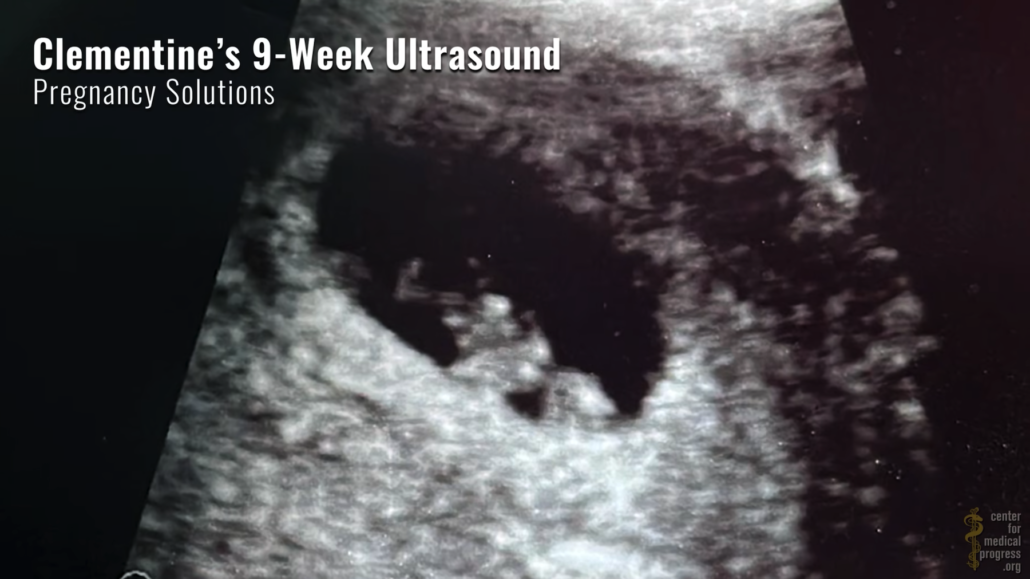
The documentary also raises a question about gestational age. A pregnancy resource center ultrasound on December 18, 2023, estimated Clementine’s size as consistent with 9 to 10 weeks’ gestation. Dr. Wheeler said “your best so-called ‘dating ultrasound’ is going to be in the first trimester” and that variance in growth makes ultrasound dating less accurate later on. If the earlier estimate holds, Clementine would in reality have been at 21 to 22 weeks’ gestation at the time of the March 13 procedure, near the threshold doctors generally consider the earliest point a fetus might survive outside the womb with medical support.
If Clementine survived birth at this gestational age, the case could raise questions under the Born-Alive Infants Protection Act.
What happened to Clementine?
The evidence in Clementine’s case includes a detected heartbeat, no documented fetal demise, a cannula too small for a 21- or 22-week fetus, a procedural timeline that makes no sense, and a transfer to a tissue procurement company with no further paper trail. Clementine’s parents don’t know if their daughter was born alive, how long she may have lived, or where her remains are now. Unanswered questions leave not just a legal case unresolved, but a family unable to grieve.
To learn more, see the full documentary What Happened to Clementine? on CMP’s YouTube channel. To get involved, contact the Department of Health and Human Services or the Department of Justice to request an investigation, contact your congressional representatives, or share the documentary linked above. You can also support Clementine’s family at this link.